Skip to content
On the Origin of Species First Edition 1859

Evolution by Natural Selection

From Galápagos finches to the Origin of Species, human origins, and the foundations of genetics.

A photo essay

Charles Darwin's Theory of Evolution

Charles Darwin developed his theory of evolution by natural selection over more than two decades, from his early observations recorded in notebooks and tucked away essays to the publication of his landmark books On the Origin of Species in 1859 and The Descent of Man in 1871. Each book elicited strong reactions, both favorable and critical, from the scientific community, the religious community, and the general public.

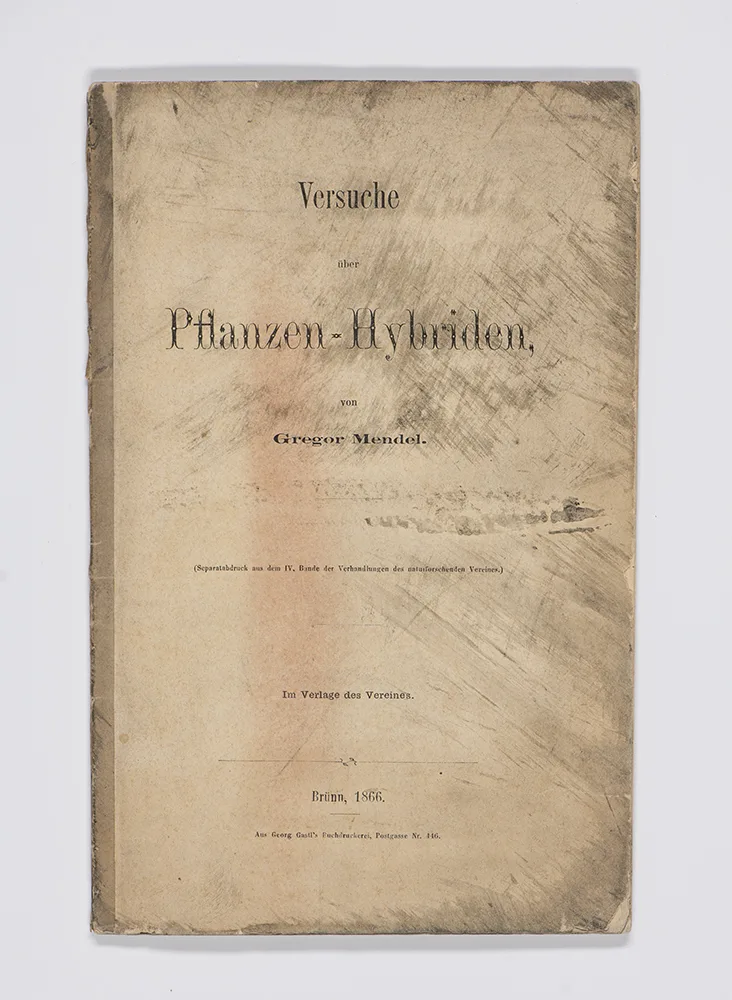
Darwin’s theory emboldened other scientists to contribute their own writings on evolution, particularly his friend Thomas Henry Huxley. Yet an explanation of how traits are inherited was missing in Darwin’s work. That answer was already in print, in Gregor Mendel's overlooked 1866 publication on pea plants, though it would be decades before anyone took notice.
Galápagos Finches & Adaptive Beaks

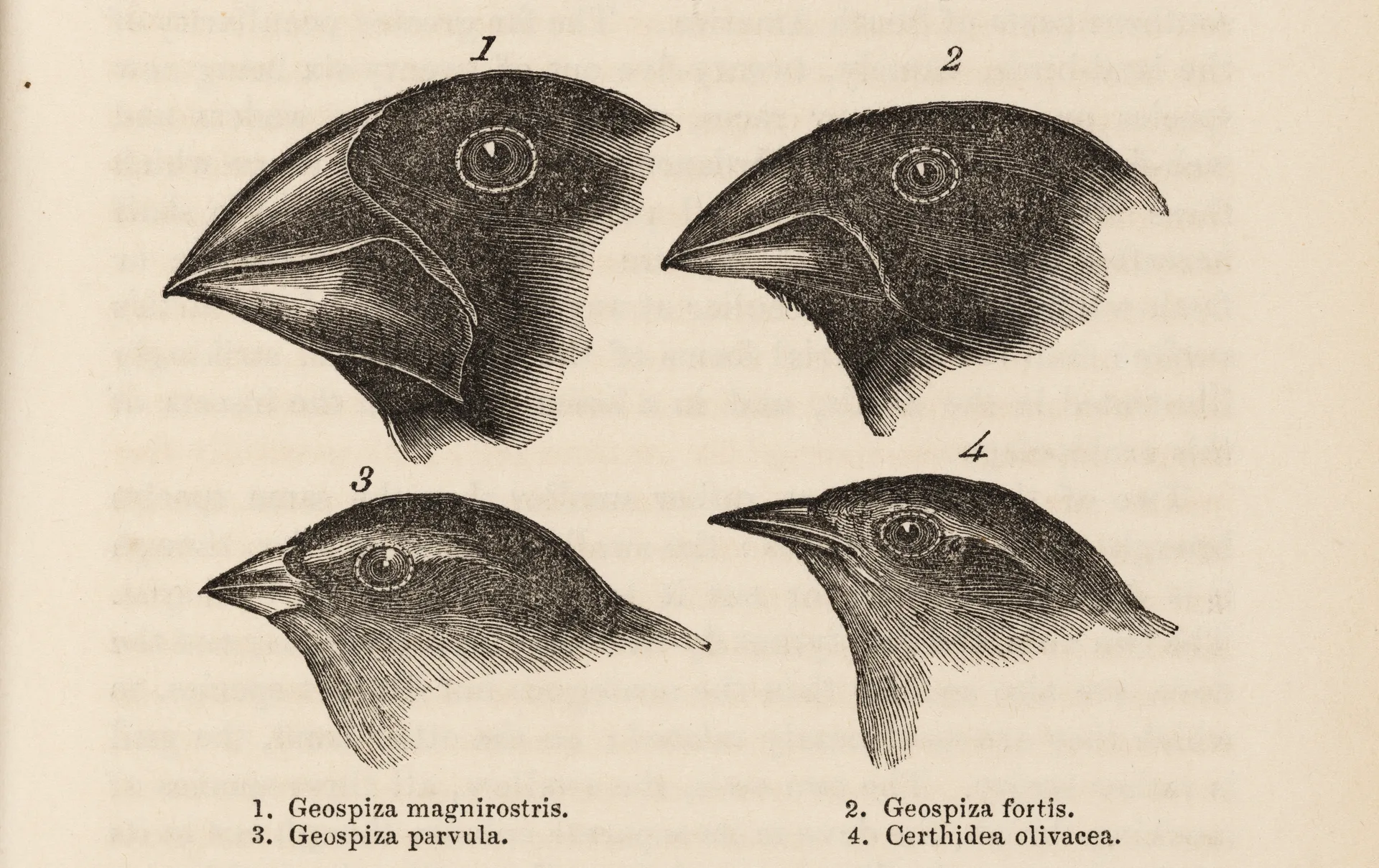
Darwin Galápagos Finches Beaks Illustration
Darwin collected bird species while visiting the Galápagos islands in 1835. He hadn’t carefully recorded the specific location each specimen came from, and he assumed they were different kinds of birds. In 1837, Ornithologist John Gould identified the specimens as closely related species of finches. This illustration of the finches with their different beak shapes appeared in the second edition of Darwin’s Journal of Researches in 1845. Rob Alexander, Digital Collections, Libraries and Cultural Resources

Essays of 1842 & 1844

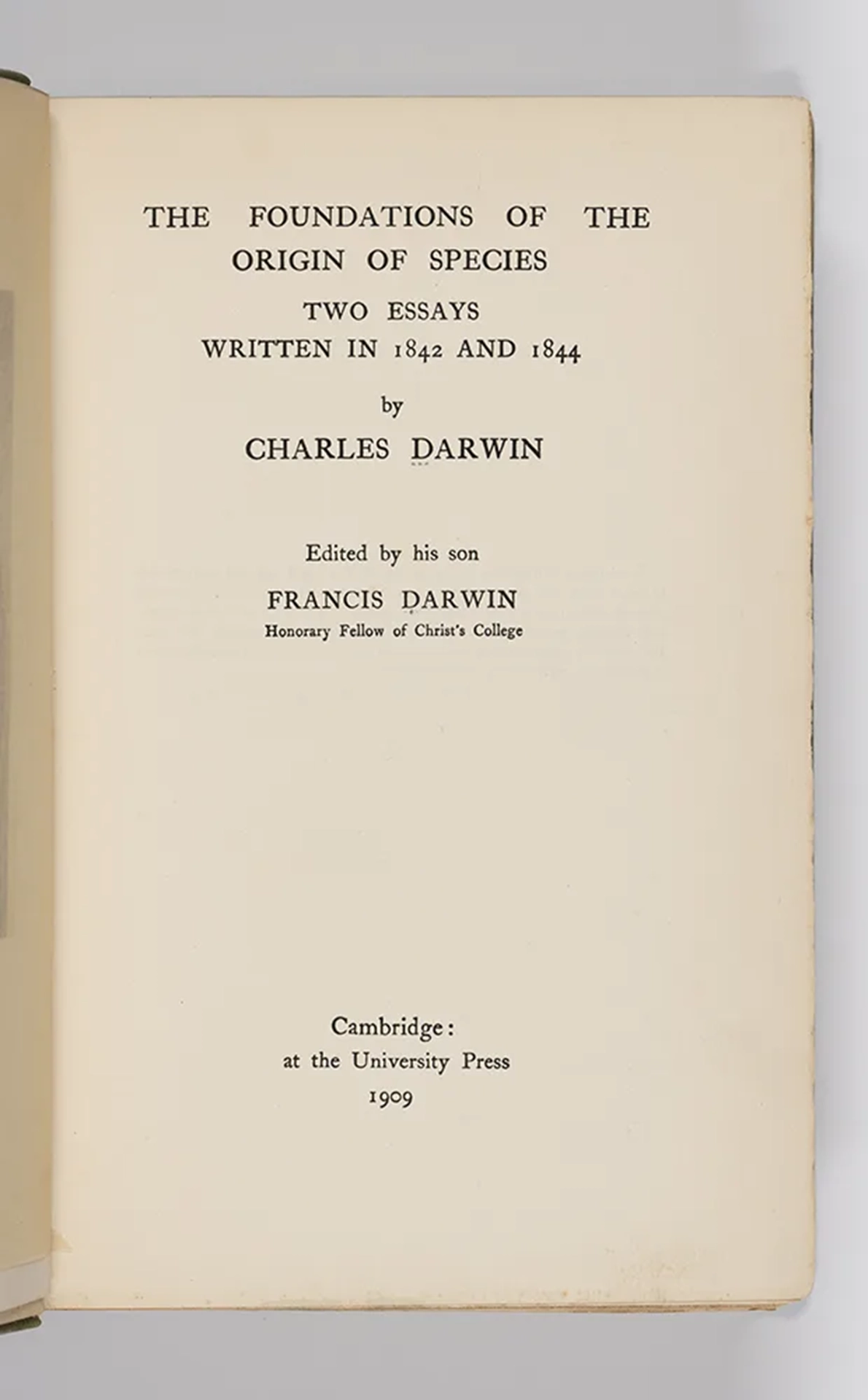
Darwin Early Essays 1842 1844
Darwin’s close friends Charles Lyell and Joseph Dalton Hooker were aware that Darwin had long been labouring on his theory of evolution by natural selection. He had described his theory in letters to a very few trusted friends and had recorded his ideas in essays that he wrote in 1842 and 1844. Darwin had entrusted these essays to his wife Emma’s safekeeping. They were only later published in full. Rob Alexander, Digital Collections, Libraries and Cultural Resources

Linnean Society Joint Reading (1858)

Linnean Society Joint Presentation 1858
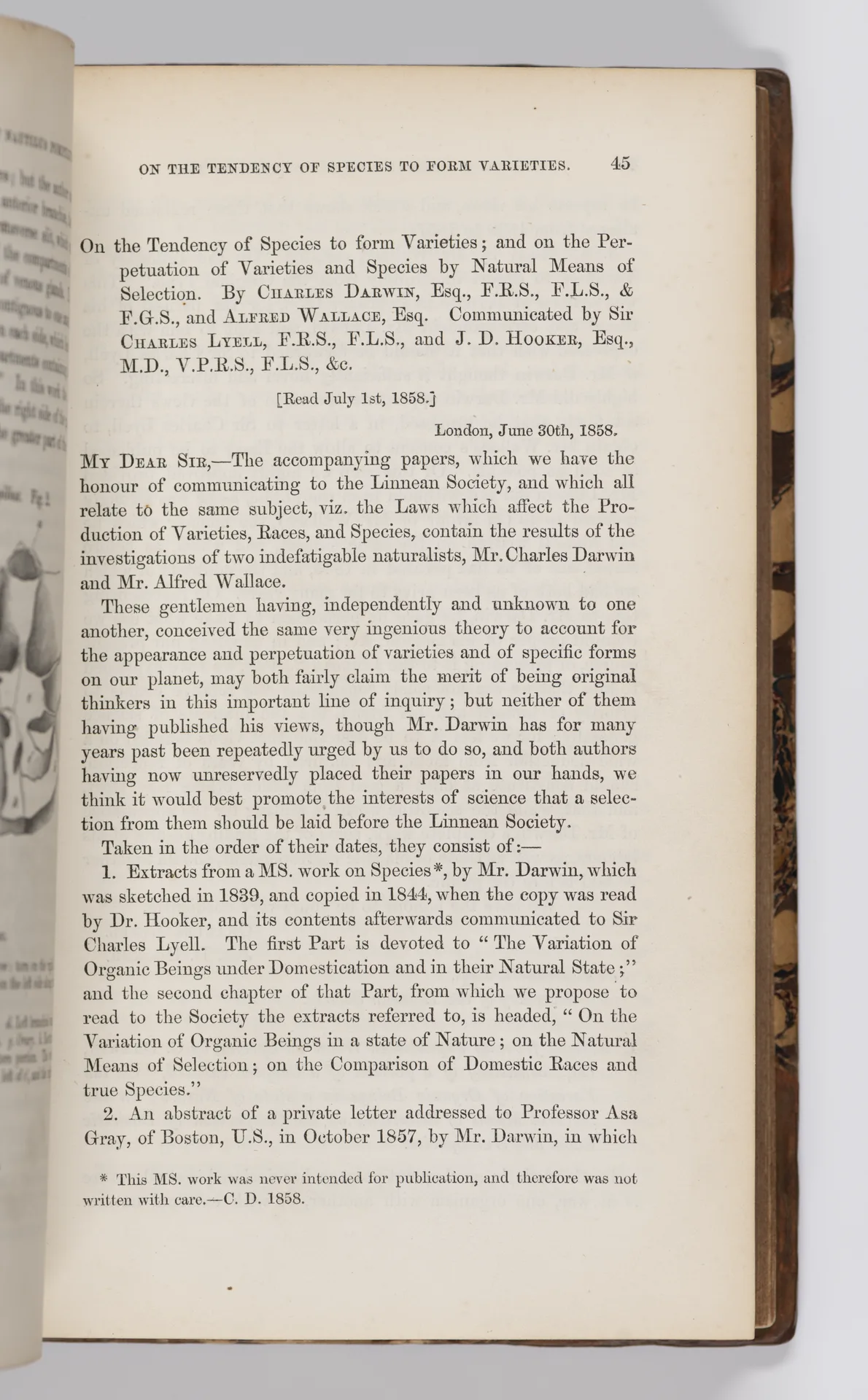
Charles Darwin and Alfred Russel Wallace each developed a theory of evolution by natural selection. Darwin’s friends Lyell and Hooker read excerpts of Darwin’s preliminary writings and Wallace’s essay at the July 1,1858 meeting of the Linnean Society. Rob Alexander, Digital Collections, Libraries and Cultural Resources

On the Origin of Species (1859)

On the Origin of Species First Edition 1859
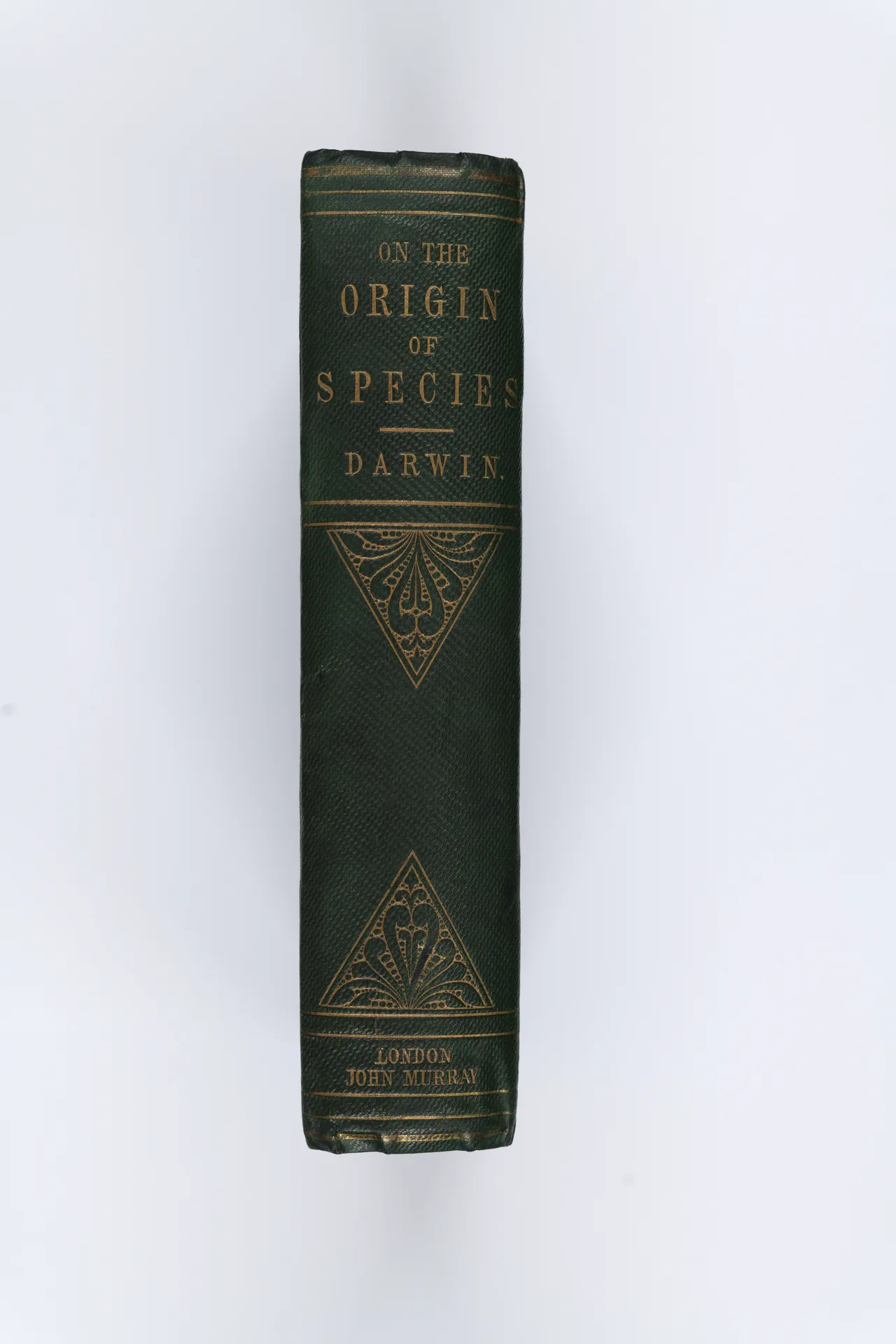
Darwin’s On the Origin of Species was published by John Murray on November 24, 1859. All 1,250 copies were spoken for within two days of its release. Rob Alexander, Digital Collections, Libraries and Cultural Resources

Artificial Selection & Pigeons

English Carrier Pigeon Artificial Selection
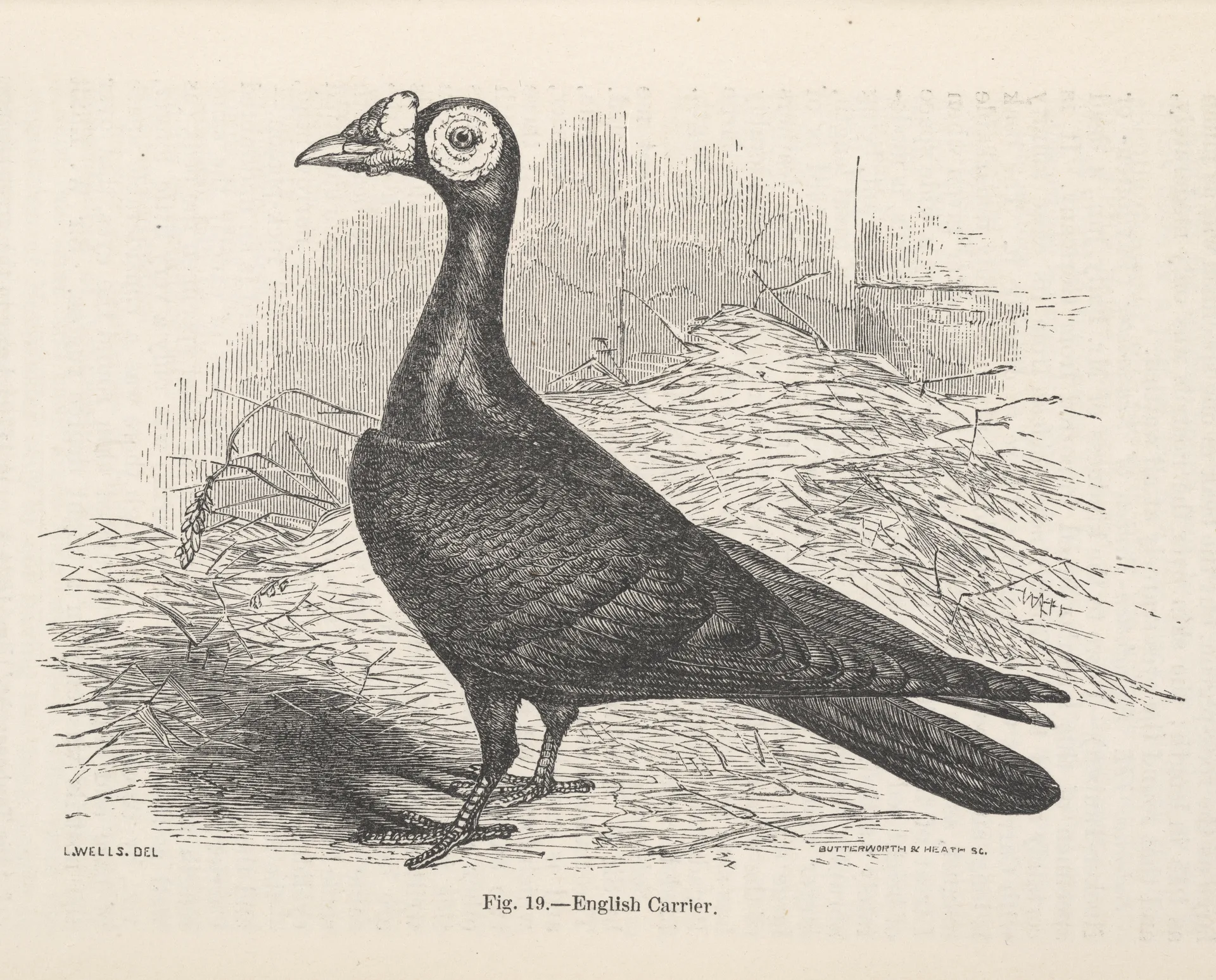
In Origin, Darwin used artificial selection as a model for natural selection. He drew on pigeons, which he bred himself and which were a popular Victorian hobby, to show to selective breeding could produce striking variation from a common ancestor, the rock pigeon. Pictured here is an English carrier. Rob Alexander, Digital Collections, Libraries and Cultural Resources

The Tree of Life

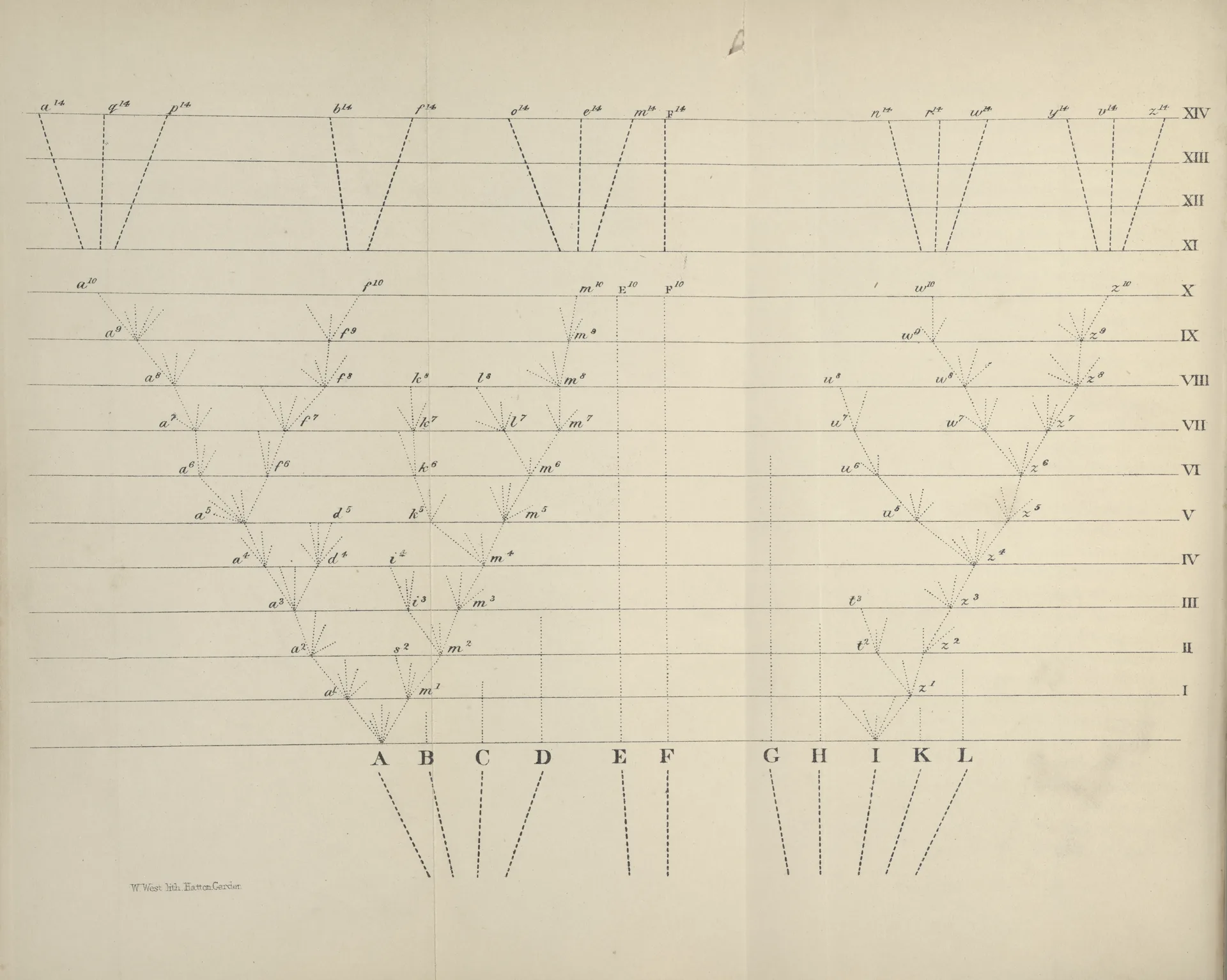
Darwin Tree of Life Diagram
Darwin used a “tree of life” metaphor to explain how all living things are connected through common ancestry, branching and diversifying over vast stretches of time. He included the tree diagram in chapter 4 of Origin. Rob Alexander, Digital Collections, Libraries and Cultural Resources

T.H. Huxley & Human Origins

TH Huxley Evidence of Mans Place in Nature
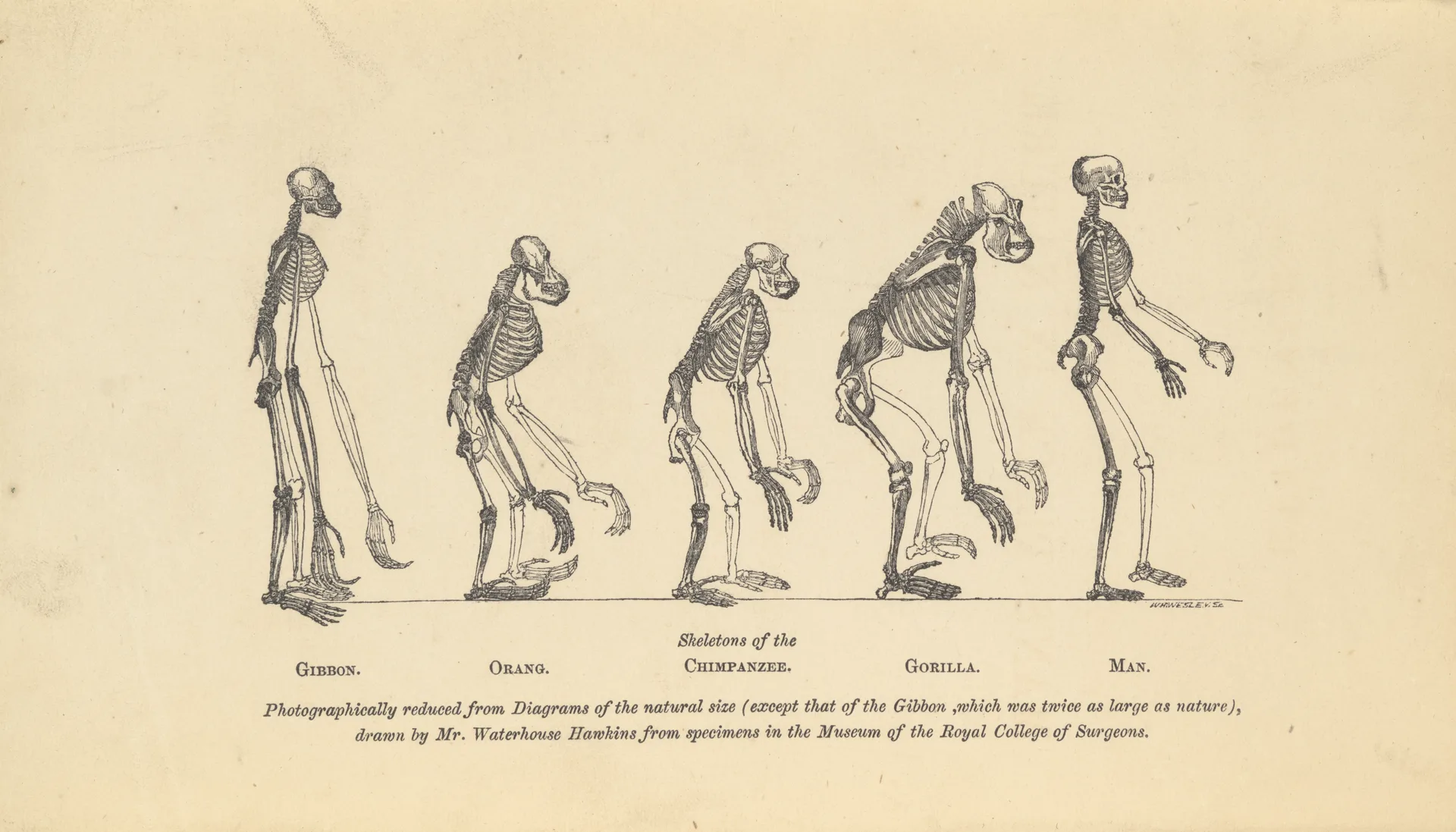
In Origin, Darwin avoided discussing human origins. His readers, however, could see Darwin’s direction. His friend and colleague T.H. Huxley published Evidence of Man’s Place in Nature in 1863. Huxley boldly went where Darwin feared to tread. Rob Alexander, Digital Collections, Libraries and Cultural Resources

The Descent of Man (1871)

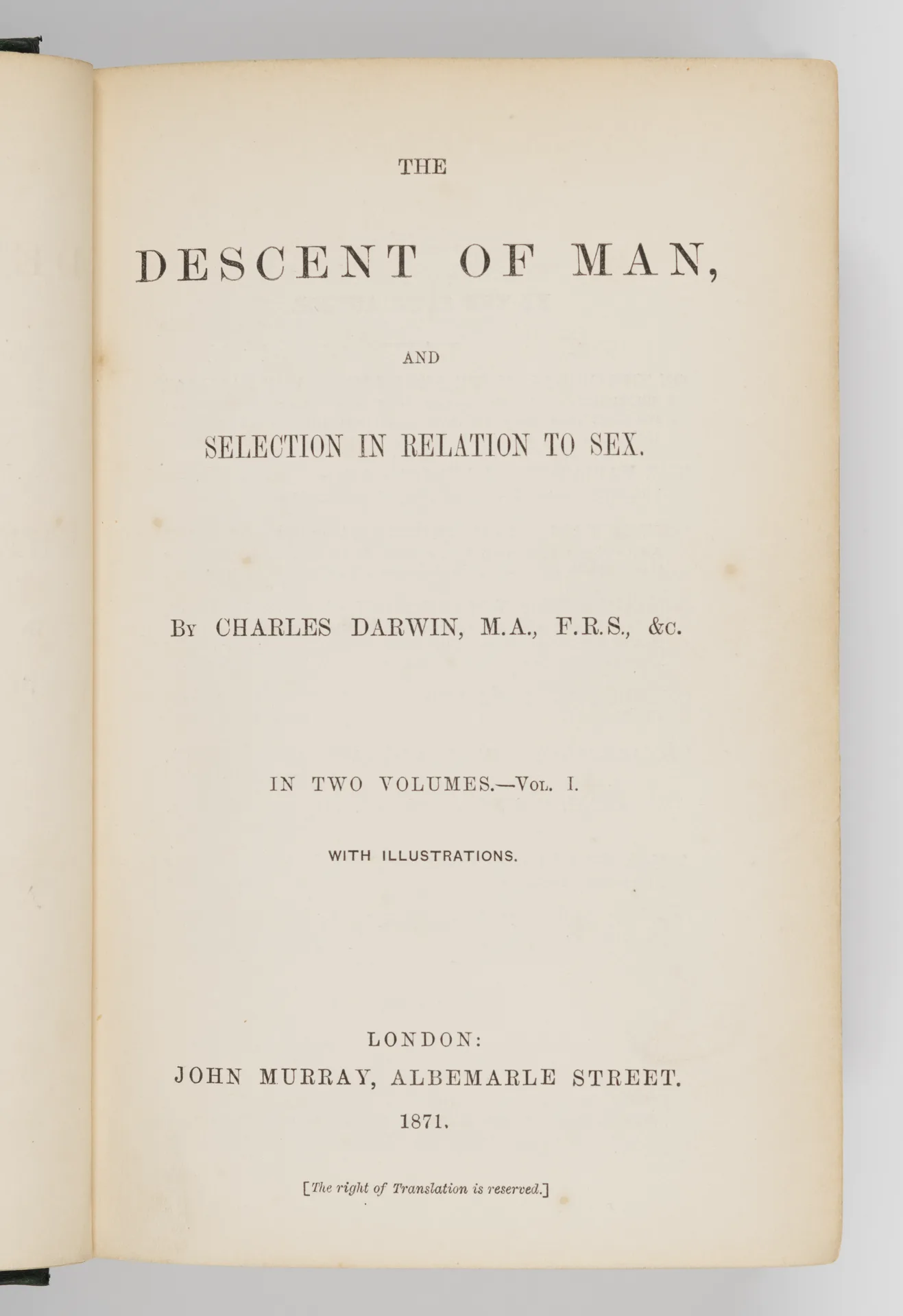
Descent of Man 1871
Darwin at last addressed human origins in The Descent of Man, published in 1871. He proposed that humans and apes share a common ancestor. Rob Alexander, Digital Collections, Libraries and Cultural Resources

Victorian Satire & Caricature

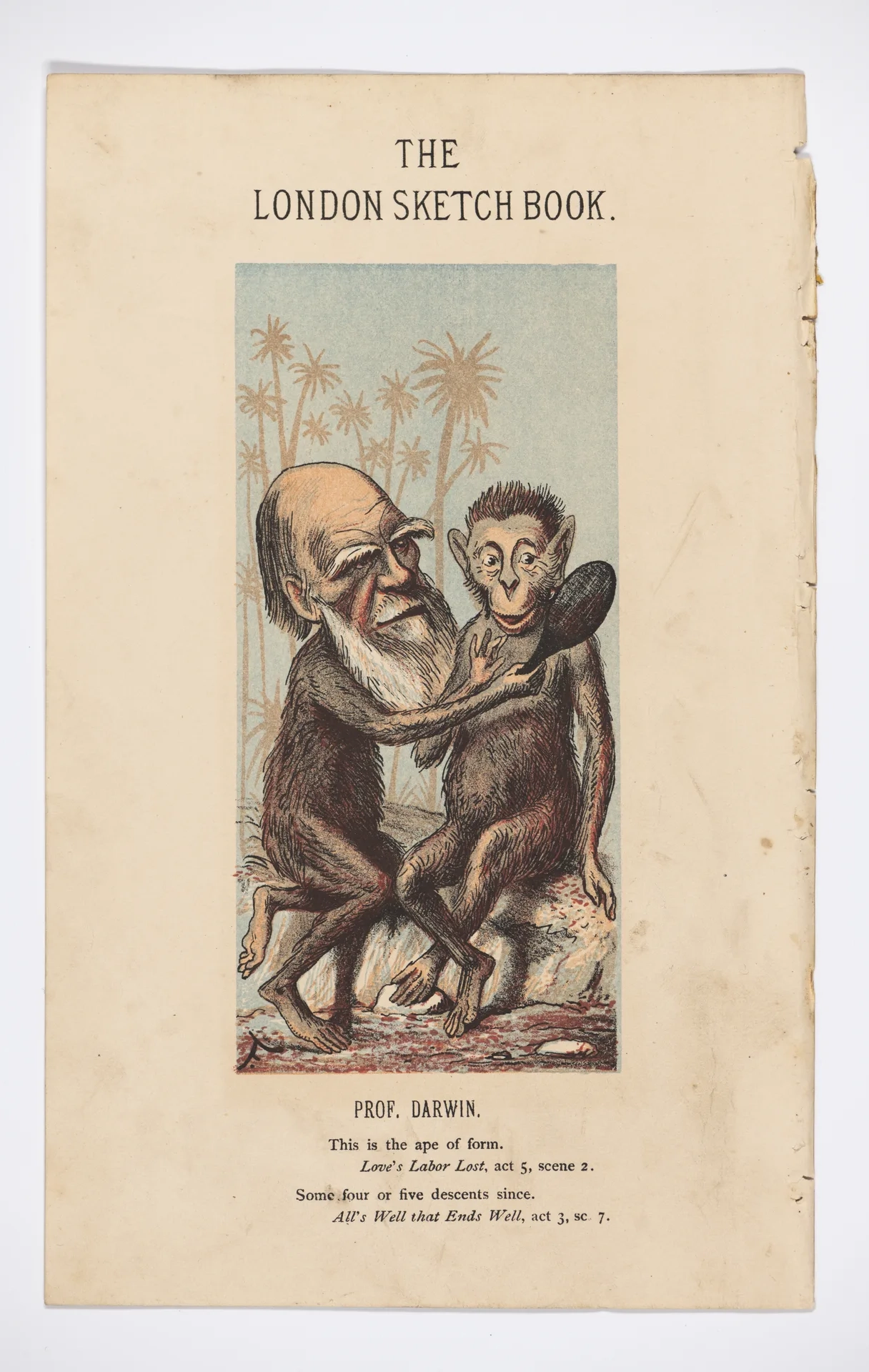
Faustin Betbeder Caricature of Darwin 1874
Darwin’s work on human origins was widely satirized. This caricature by Faustin Betbeder first appeared in Figaro in London in February 1874 and was reprinted the same year in The London Sketch Book. Rob Alexander, Digital Collections, Libraries and Cultural Resources

Merchant's Gargling Oil Trade Card

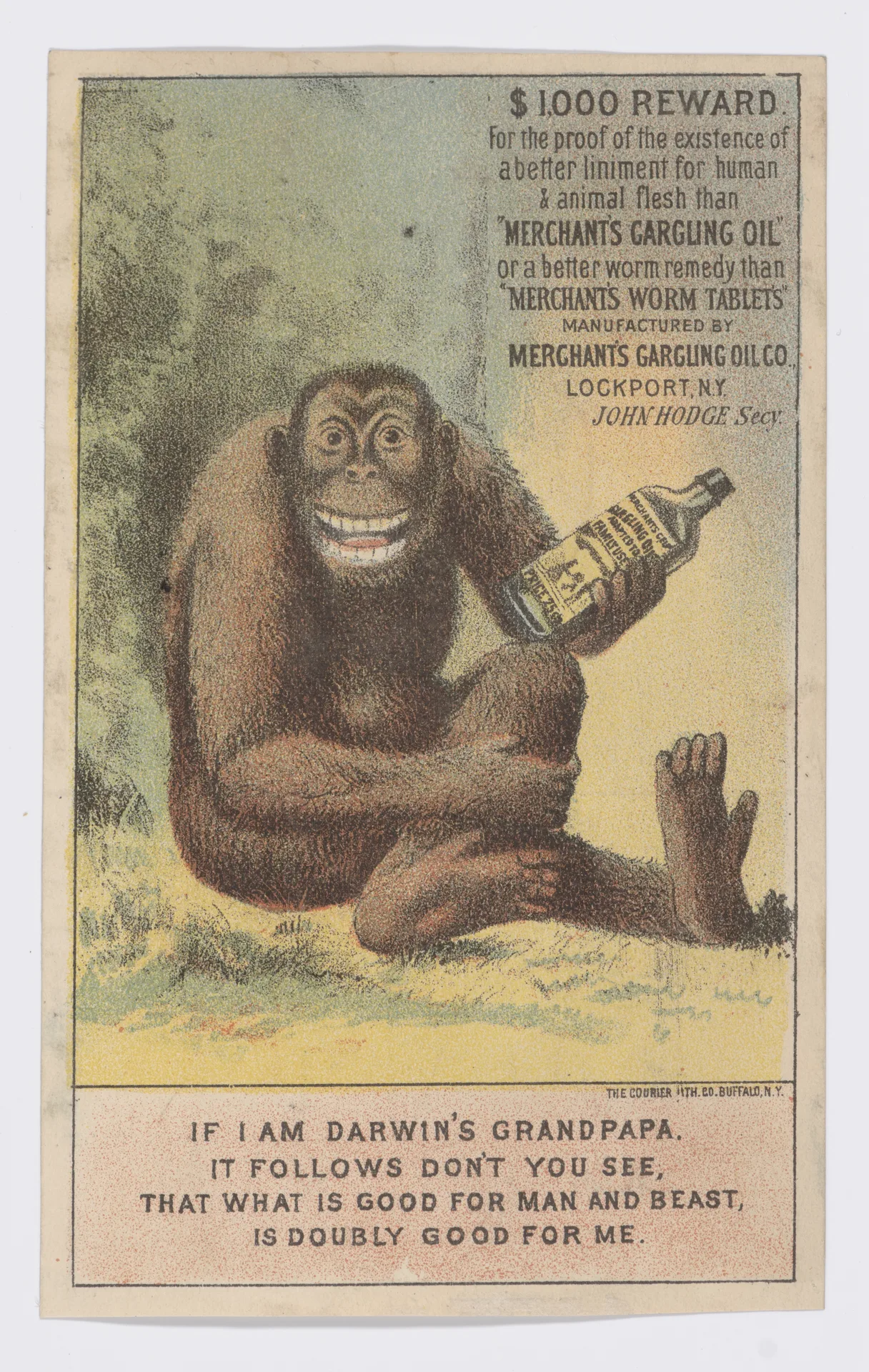
Merchants Gargling Oil Trade Card
This trade card advertises Merchant’s Gargling Oil, a liniment “for man and beast” produced by George W. Merchant’s company in Lockport, New York. The trading card was likely produced in the 1870s or 1880s. Rob Alexander, Digital Collections, Libraries and Cultural Resources

Gregor Mendel & Inheritance

Gregor Mendel Pea Plants Experiments
Gregor Mendel (1822-1884) was an Augustinian monk who conducted experiments on plant hybridization. By crossing different varieties of pea plants and following their offspring over several generations, he discovered consistent patterns in the way traits, such as flower colour, were inherited. He proposed that these inherited characteristics were determined by distinct units, which we now know as genes. Different forms of these units, or alleles, can be acquired from each parent, leading to predictable patterns. These principles are now known as Mendelian inheritance. He published his findings in 1866, but unfortunately, they were overlooked for decades. Rob Alexander, Digital Collections, Libraries and Cultural Resources

William Bateson & Mendel's Rediscovery

William Bateson Mendels Principles of Heredity
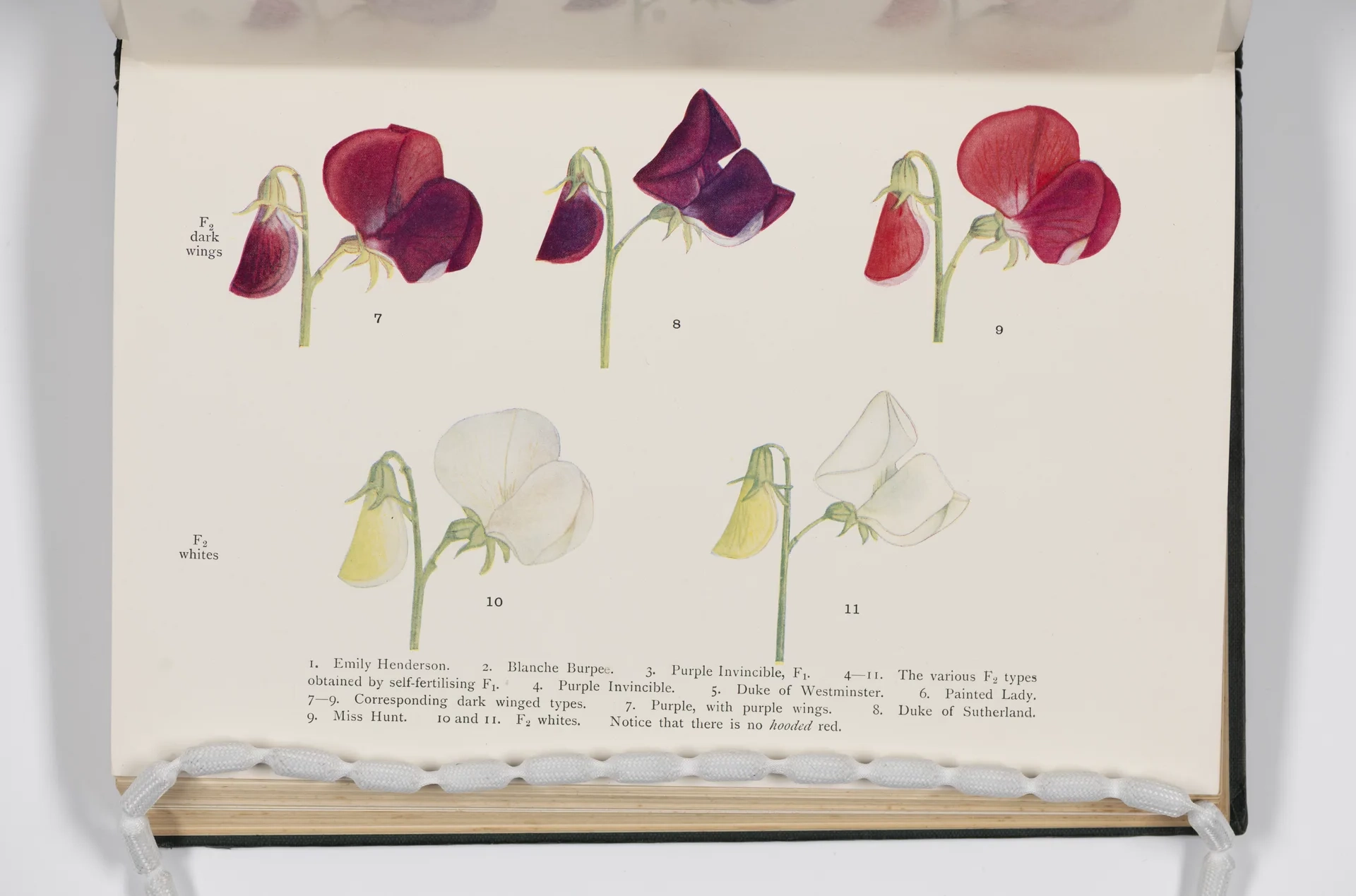
William Bateson helped spread awareness of Mendel’s work by translating it into English in the early 1900s. This illustration of pea plants is from Bateson’s Mendel’s Principles of Heredity, published in 1909. Rob Alexander, Digital Collections, Libraries and Cultural Resources
Give feedback opens a new window